
Balance & Vestibular Testing
Feeling dizzy or unsteady can make ordinary movements harder than they should be. You may notice it when getting out of bed, walking downstairs or turning your head quickly. A balance assessment can help us look more closely at what may be causing those symptoms.
At Wavefront Hearing, we use a series of vestibular tests to see how your eyes, inner ears and balance system work together. The results can help identify where the problem may be coming from and guide any follow-up care you may need.
Balance Testing and Why It Matters
Your balance depends on information from your inner ears, eyes and nervous system. When one of those areas is not working as expected, the symptoms can feel very similar.
Testing helps us compare how each part is responding instead of relying on symptoms alone. The results can show where the problem may be coming from and help guide the next step in your care.
When Balance Testing May Help
Balance problems do not always feel like dramatic spinning. You may simply feel less steady, notice your vision shifting while you walk or avoid certain movements.
Testing may be helpful if you experience:
- Dizziness, lightheadedness or vertigo
- Feeling unsteady or off balance
- Trouble keeping your vision focused while moving
- Ringing, pressure or fullness in your ears
- Hearing changes that happen with balance symptoms
These symptoms can come from different parts of the balance system. Testing helps narrow down what may be causing them and what kind of follow-up care may be needed.
Conditions We Look For During Testing
Different balance conditions can cause very similar symptoms. We use several tests to see how each part of your balance system is responding. This helps us narrow down what may be behind the dizziness or unsteadiness.
Conditions we may evaluate include:
- Benign paroxysmal positional vertigo (BPPV)
- Vestibular neuritis or labyrinthitis
- Ménière’s disease
- Vestibular migraine
- Age-related or autoimmune inner ear changes
Not every balance problem begins in the inner ear. The results may show that another part of the balance system needs a closer look or that further assessment is needed.
Your Balance Appointment Experience
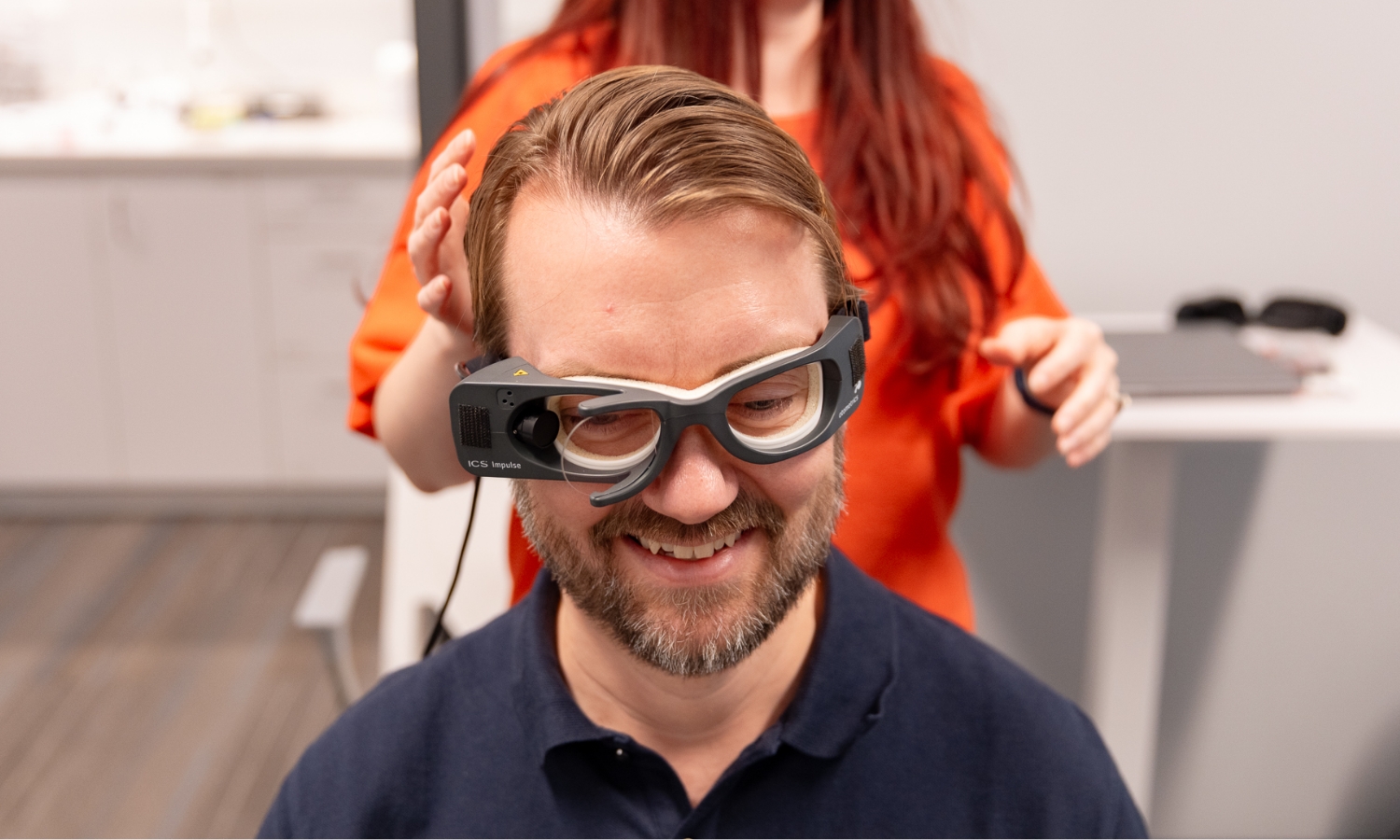
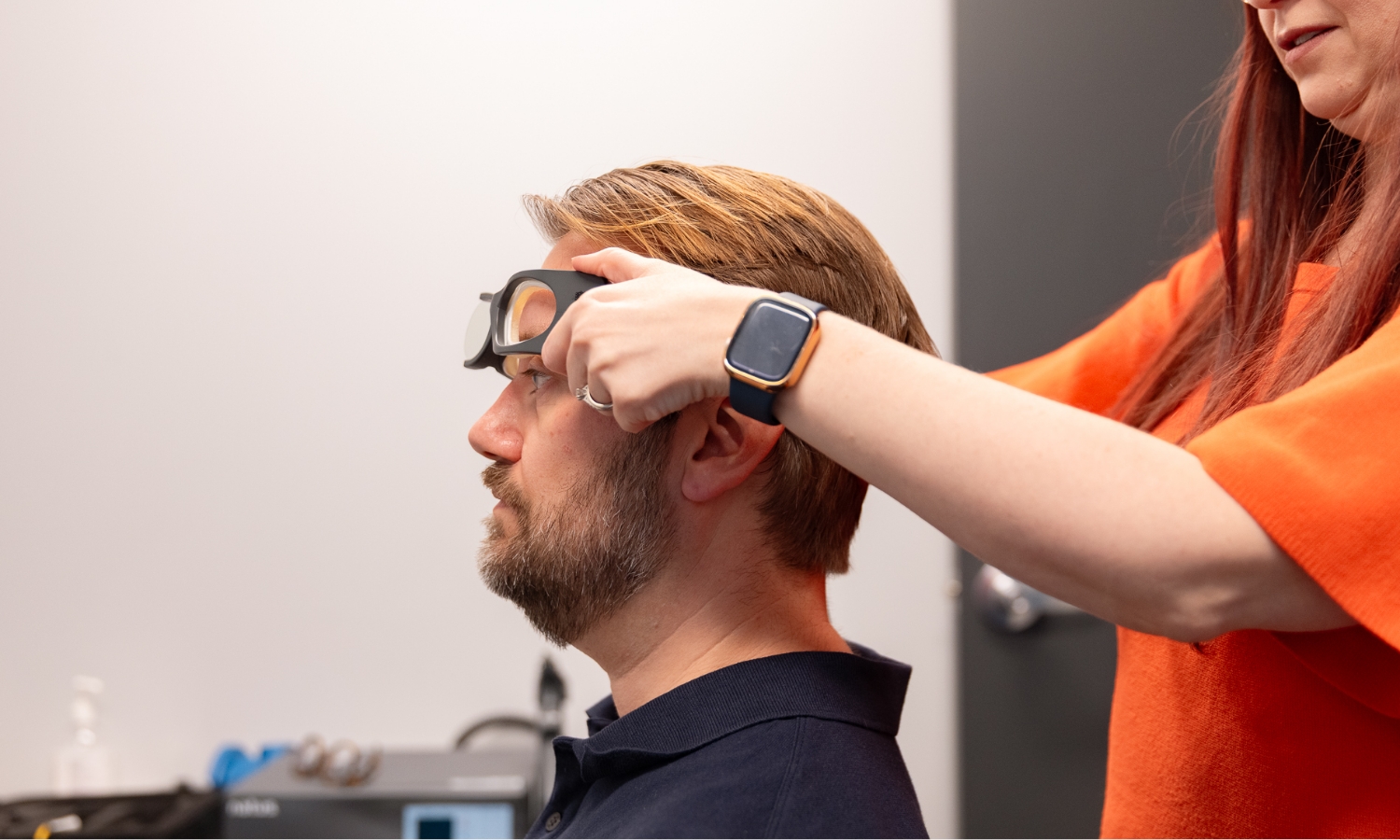
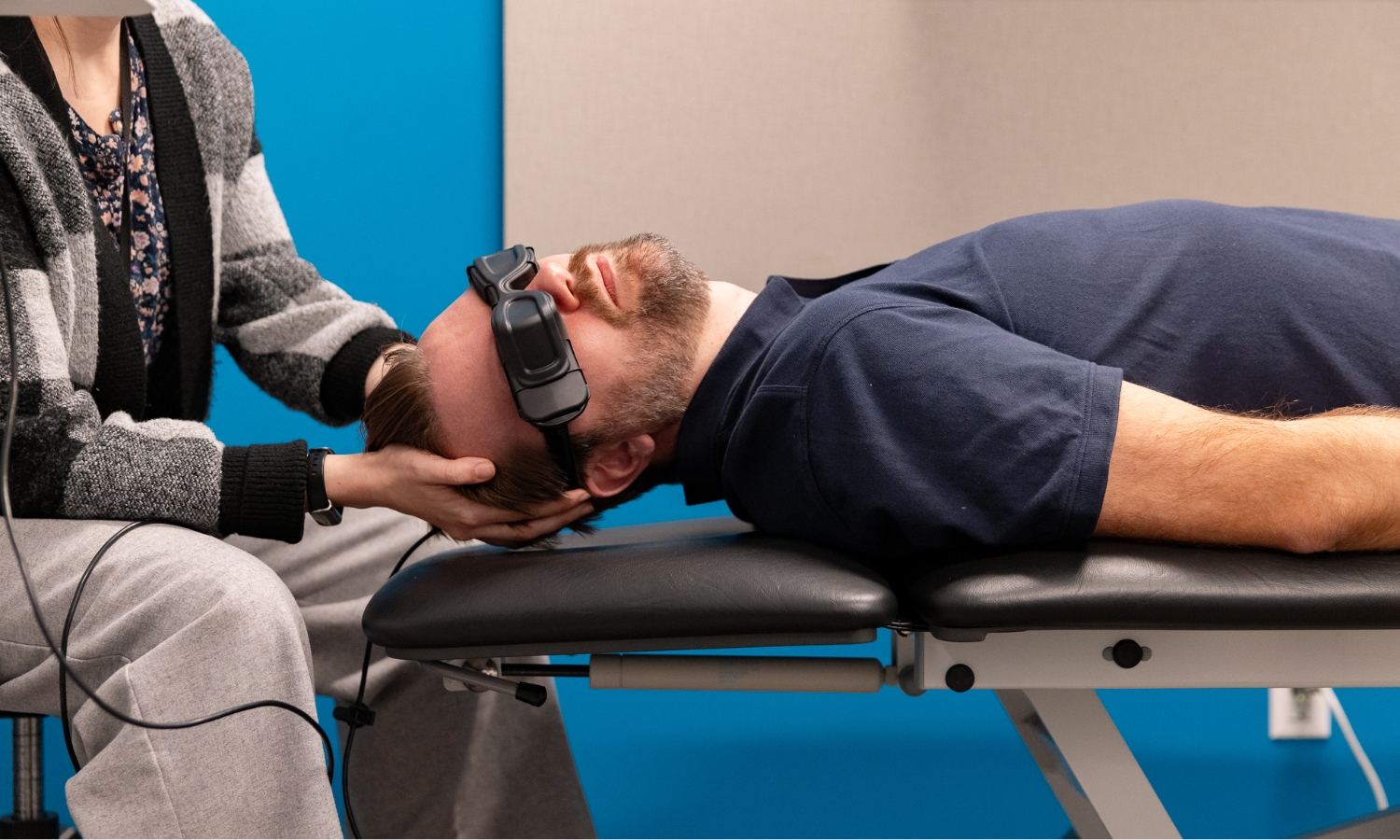
Your appointment begins with a conversation about your symptoms, medical history and the situations that bring on dizziness or balance problems. The assessment then moves through a series of vestibular tests performed while you wear lightweight goggles that record your eye movements.
Depending on your symptoms, our team will evaluate visual tracking, different head and body positions and each ear’s balance response using warm and cool air. Most balance appointments take about 90 minutes.
Some parts of the assessment may briefly reproduce dizziness or vertigo, but those responses are recorded as part of the test. When the assessment is finished, your clinician will review the results with you, explain what they show and answer any questions you have.
Vestibular Tests We Perform
Videonystagmography
A vestibular test that records your eye movements during a series of balance tests. The balance organs in your inner ear send signals that control how your eyes move as your head changes position.
Video Head Impulse Test (vHIT):
Measures the vestibulo-ocular reflex by tracking your eye movements during quick, small head turns, helping us assess how well your eyes and inner ears are communicating.
SOP GANS (Sensory Organization Performance):
Evaluates how effectively your brain is combining information from your vision, your inner ear, and your physical sense of touch/grounding to maintain your posture and balance.
Positional Testing:
Assesses how your balance system reacts to specific, gentle changes in your head and body position. This is especially helpful for identifying conditions like BPPV.
Air Calorics
Uses precisely controlled warm and cool air introduced into the ear canal to gently stimulate the inner ear. This allows us to isolate and compare the exact balance response of each ear individually.